IoT Field Notes: Introducing Something New
Why aren't we moving faster? This story of a quick, simple back-of-envelope calculation that showed the large potential of a new product idea really got the team to think.


Every AI initiative eventually meets the finance committee. The cost-savings story works fine in an operations review, but the room one floor up wants to know which lever this pulls - earnings, capital efficiency, or the multiple. Here's the translation, lever by lever.
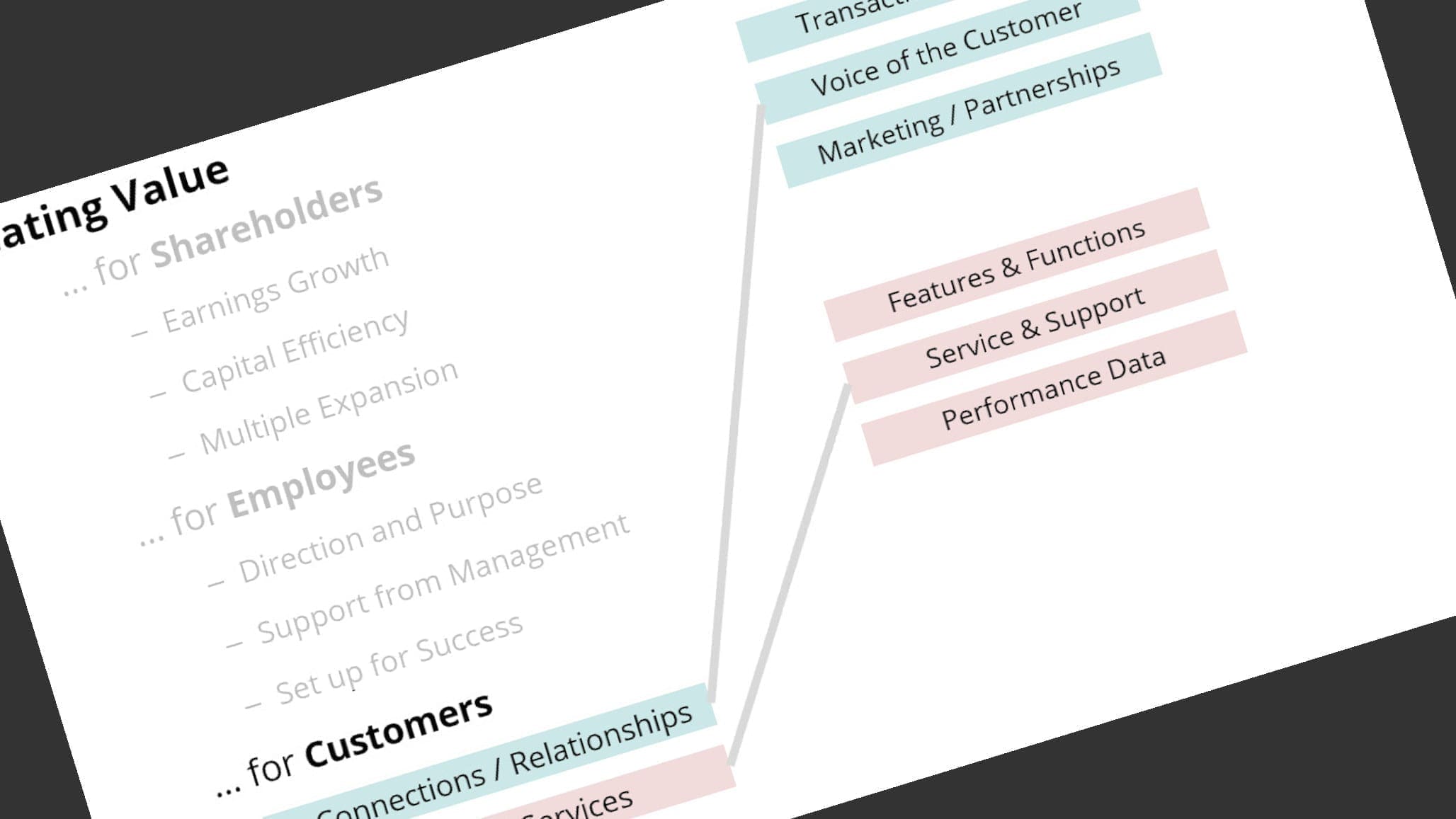
Every AI initiative has to answer one question: what's the value, and for whom? The honest answer involves three stakeholders - shareholders, employees, customers - with sometimes-competing needs. A framework for mid-market leaders justifying AI investments in real meetings, with real budgets, to real CFOs.
Most AI innovation programs produce demos, not results. The environment that actually ships sits between the sandbox and the cowboy - and it requires judgment, not just enthusiasm.
The gap between knowing a job and understanding it has been invisible for decades. AI is about to make it the most important distinction on your team.
Everyone wants to jump straight to the AI tools. But real AI transformation starts with understanding why your business needs to change - and what success looks like before you write a single prompt.
Every technology project comes down to two things: getting information into systems or getting information out. Understanding this pattern changes how you approach digital transformation - and determines whether AI creates value or just complexity.
That $2M IoT investment isn't failing because of technology. It's failing because your operational data is fragmented and your customer intelligence is siloed. Here's how the companies who actually succeed approach product intelligence.
Industrial B2B companies know more about their customers than Amazon ever could - what they manufacture, how their production runs, when equipment needs service. The problem? That intelligence is trapped in systems designed to process transactions, not generate insights.
The best AI implementations I've seen started with something unexpected: companies running 15-year-old ERP systems. Not the newest platforms - old, stable systems sitting on decades of clean operational data. Your ancient ERP might be your biggest AI advantage.